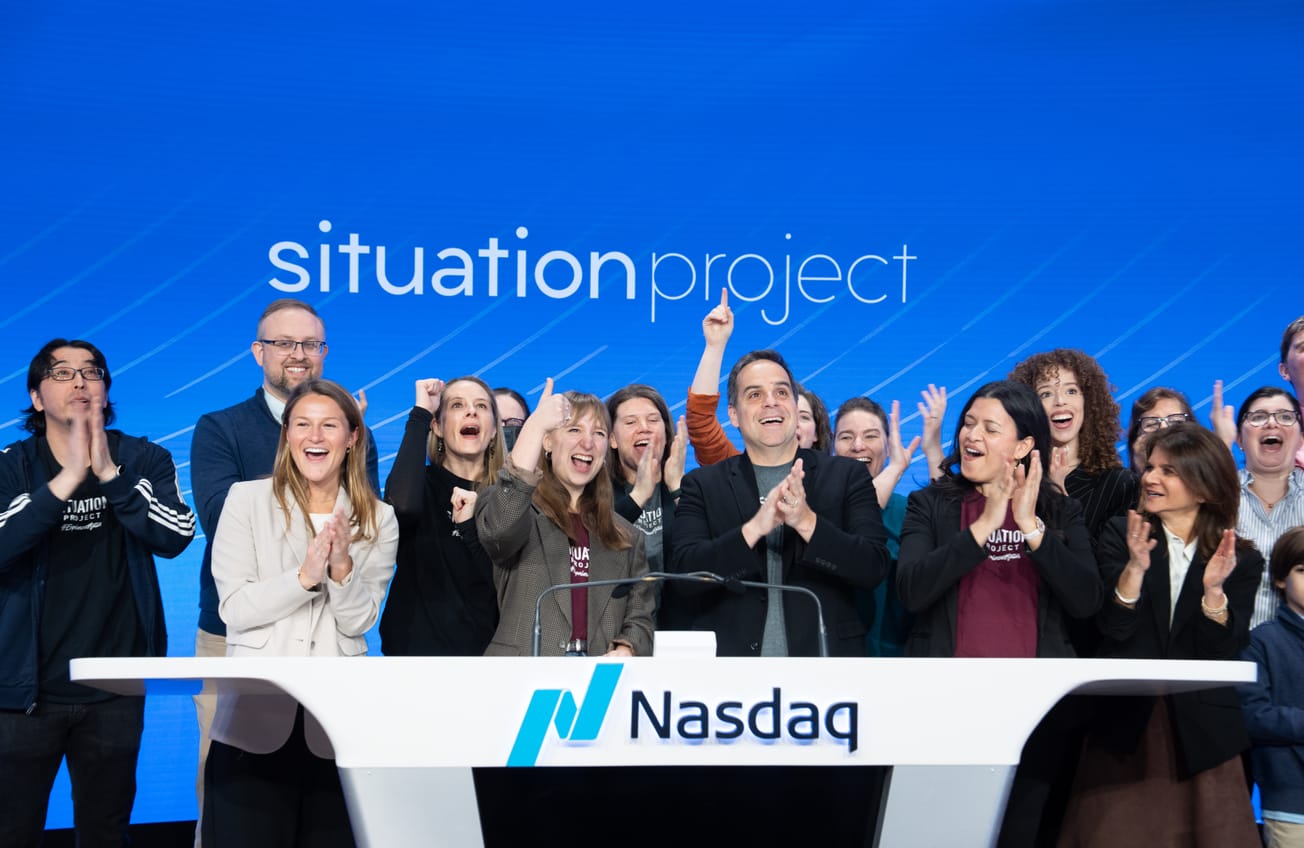
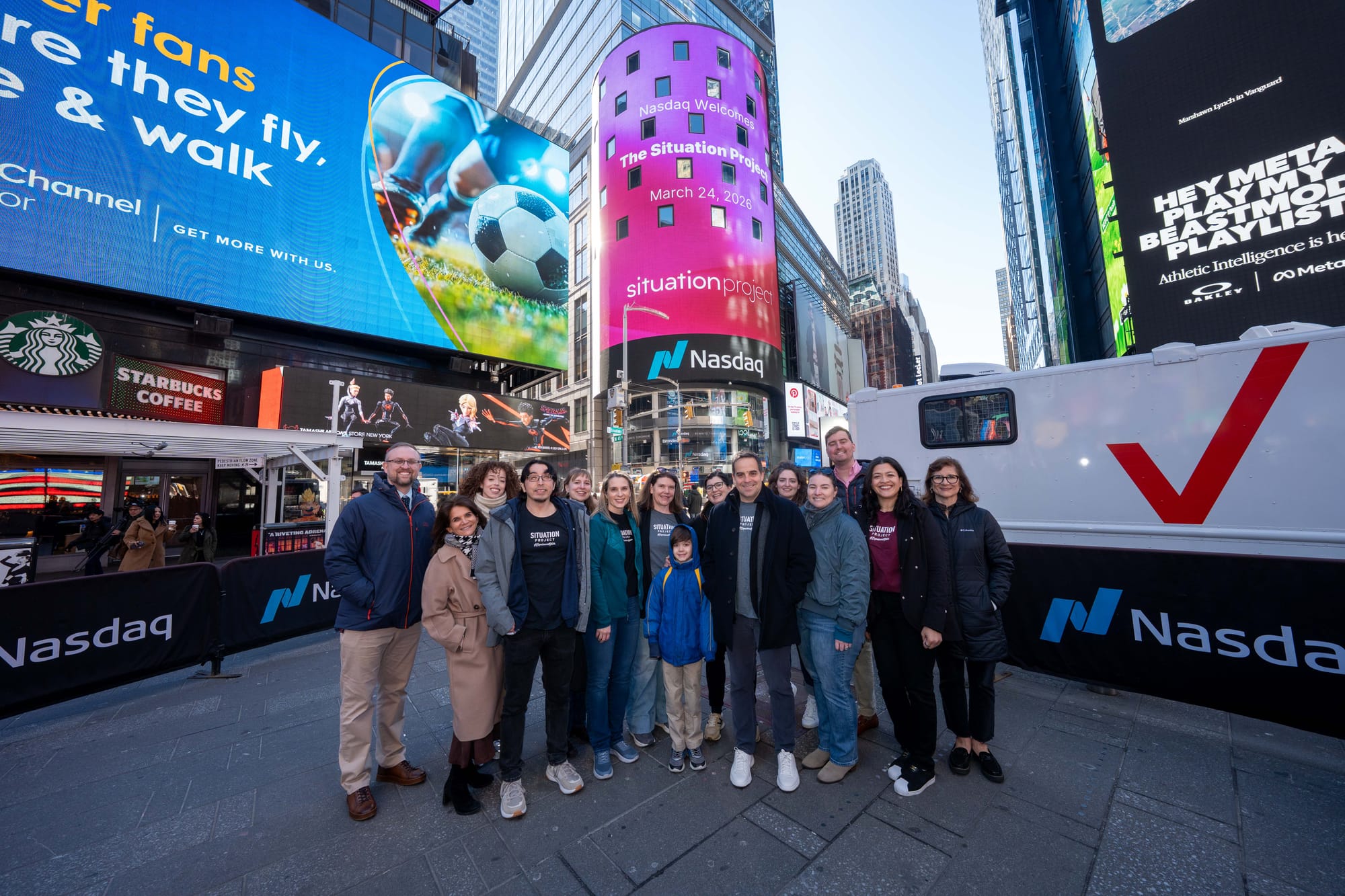
On a Tuesday morning in Times Square, as traders, tourists, and screens flickered to life, a different kind of signal cut through the noise. Members of Situation Project—alongside colleagues from Situation Group and Town Hall, longtime supporters, educators, and friends—gathered inside the Nasdaq building to mark a moment that felt both improbable and earned.
They were there to ring the Opening Bell.
For decades, Nasdaq has invited companies to mark milestones: IPOs, acquisitions, anniversaries. In recent years, that invitation has widened to include nonprofits, organizations whose work may not trade on the market, but whose impact shapes the world in equally tangible ways. From global health initiatives to education equity organizations, the bell has increasingly become a platform to spotlight missions that deserve broader attention. On March 24, that spotlight turned to arts access.
“On behalf of everyone at Situation Project, I just want to send a very warm thank you to the folks at Nasdaq for having us here today,” said founder Damian Bazadona, standing before the room. “It’s a great honor to be here.”
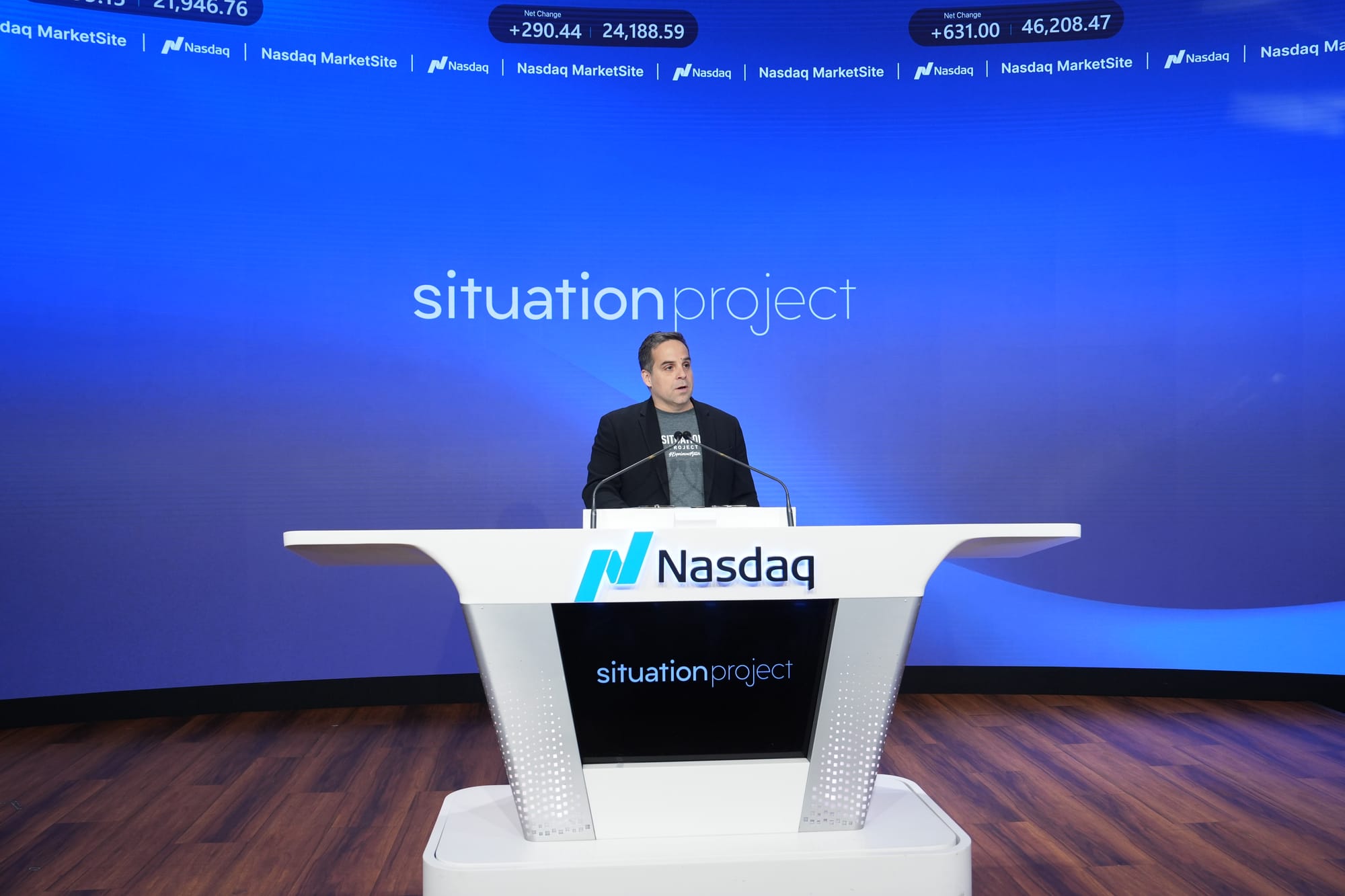
Behind him, the iconic screens glowed. Around him, a community that has helped shape the organization over more than a decade—staff, donors, volunteers, teachers—stood shoulder to shoulder.
But the story he told reached far beyond the room.
The Seats We Don’t See
Each year, millions of seats across New York City’s cultural institutions go unfilled.
“From the magic of Broadway to the awe of the opera to the sounds of world-class symphonies,” Bazadona said, “on any given night, a significant number of seats to these amazing experiences will go unsold.”
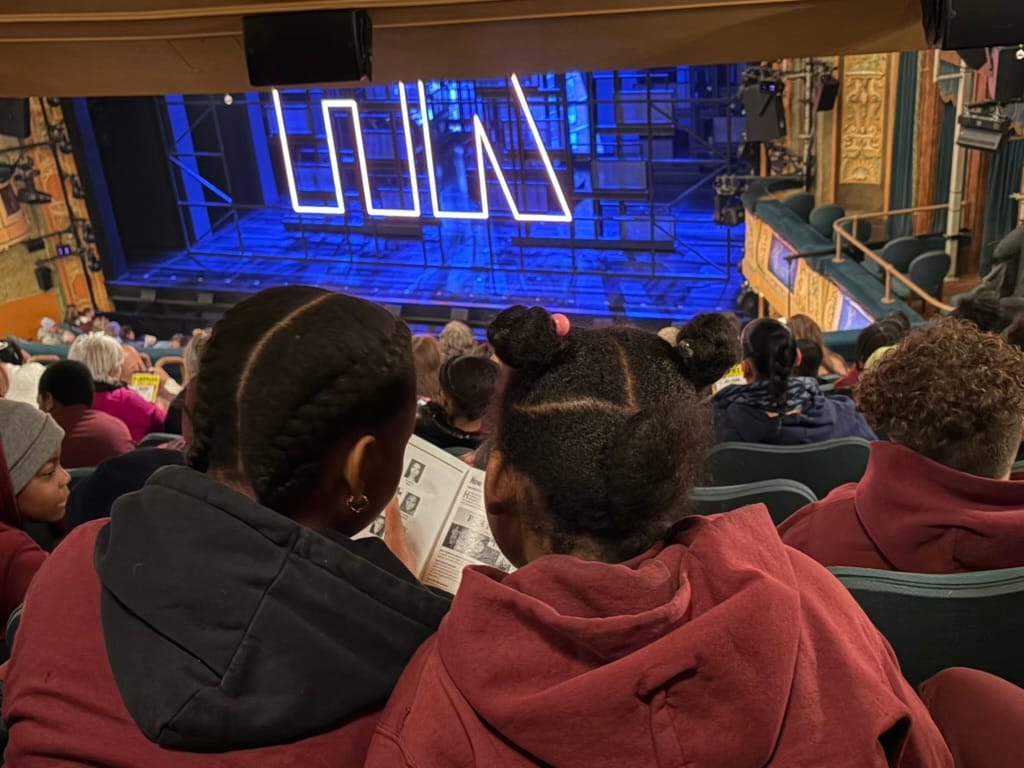
It’s a quiet truth of the arts ecosystem, one that exists alongside another: thousands of students across the city who have never had the chance to step inside those spaces.
Situation Project was built in that gap.
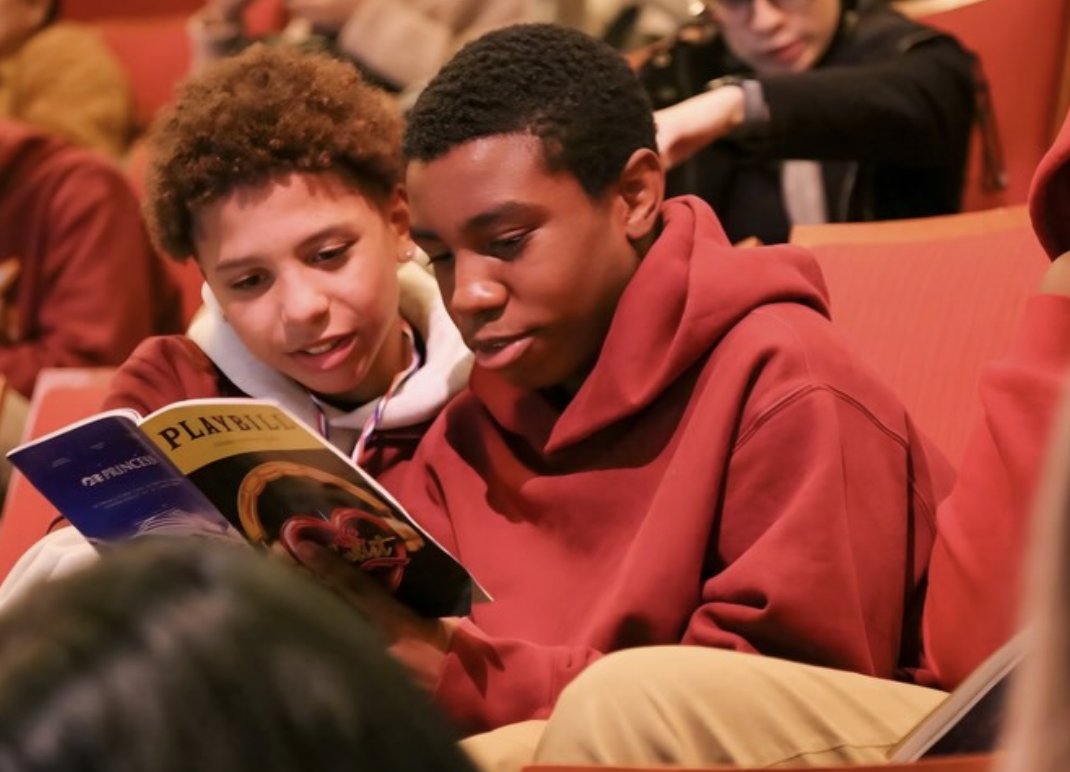
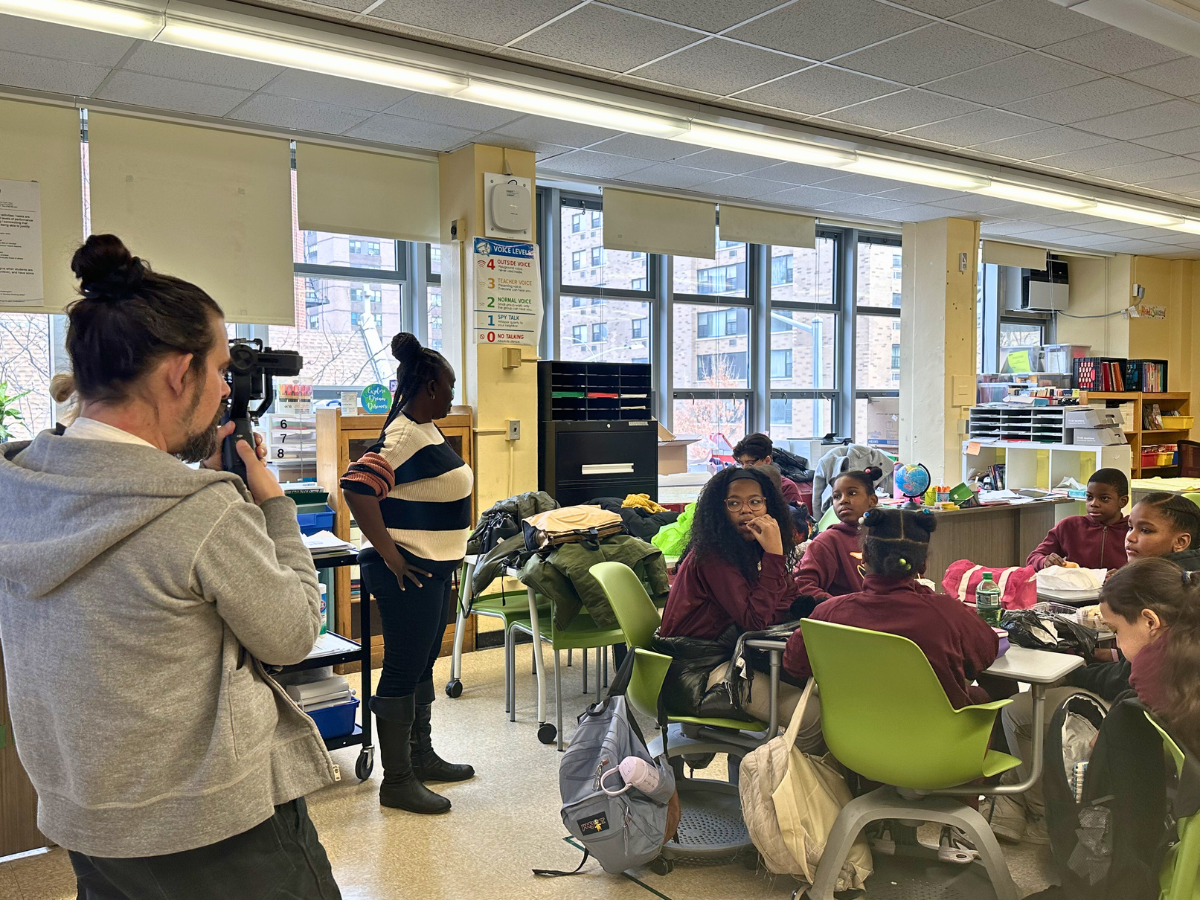
“For over a decade, we’ve worked directly with New York City public schools to subsidize tickets to bring underserved students to live events,” Bazadona continued.
The organization’s model is simple in concept, but transformative in practice: take what would otherwise go unused, and turn it into a first encounter with the arts. A first curtain call. A first moment of recognition, of seeing yourself reflected on stage, or simply realizing that you belong in the audience.
Why the Bell Matters
In recent years, exchanges like Nasdaq have made a practice of inviting mission-driven organizations to ring the bell, recognizing that markets don’t exist in isolation from the communities around them. Education, access, public health, and the arts are all part of the broader ecosystem that allows cities—and economies—to thrive.
For Situation Project, the invitation came together quickly. A last-minute opportunity, made possible through relationships and a readiness to say yes when the moment appeared.
And that, too, is part of the story.
Because so much of this work—opening doors, building partnerships, making access possible—happens through networks of people who believe in the same idea: that these experiences matter.
A Village, in the Room
As Bazadona spoke, he paused to acknowledge the people who make that idea real.
“Thank you to all of our amazing donors, volunteers, staff, supporters,” he said. “But I especially want to thank all the hard-working school administrators and teachers who have gone above and beyond consistently in implementing our programs. After all these years, it truly takes a village.”
That village was visible in the room that morning.
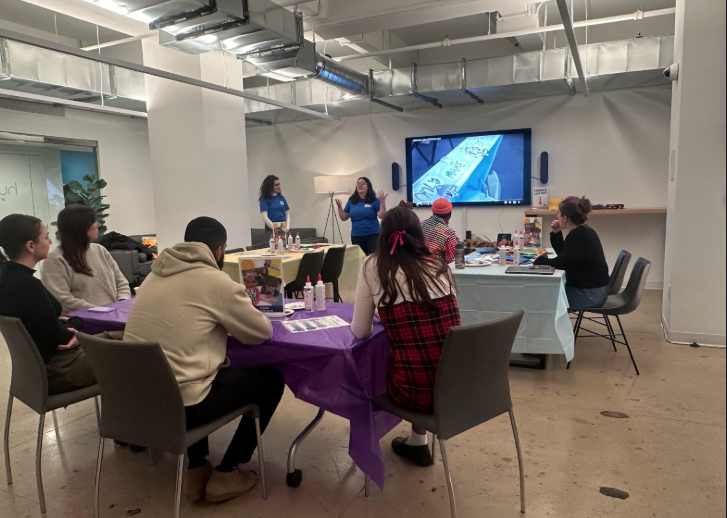
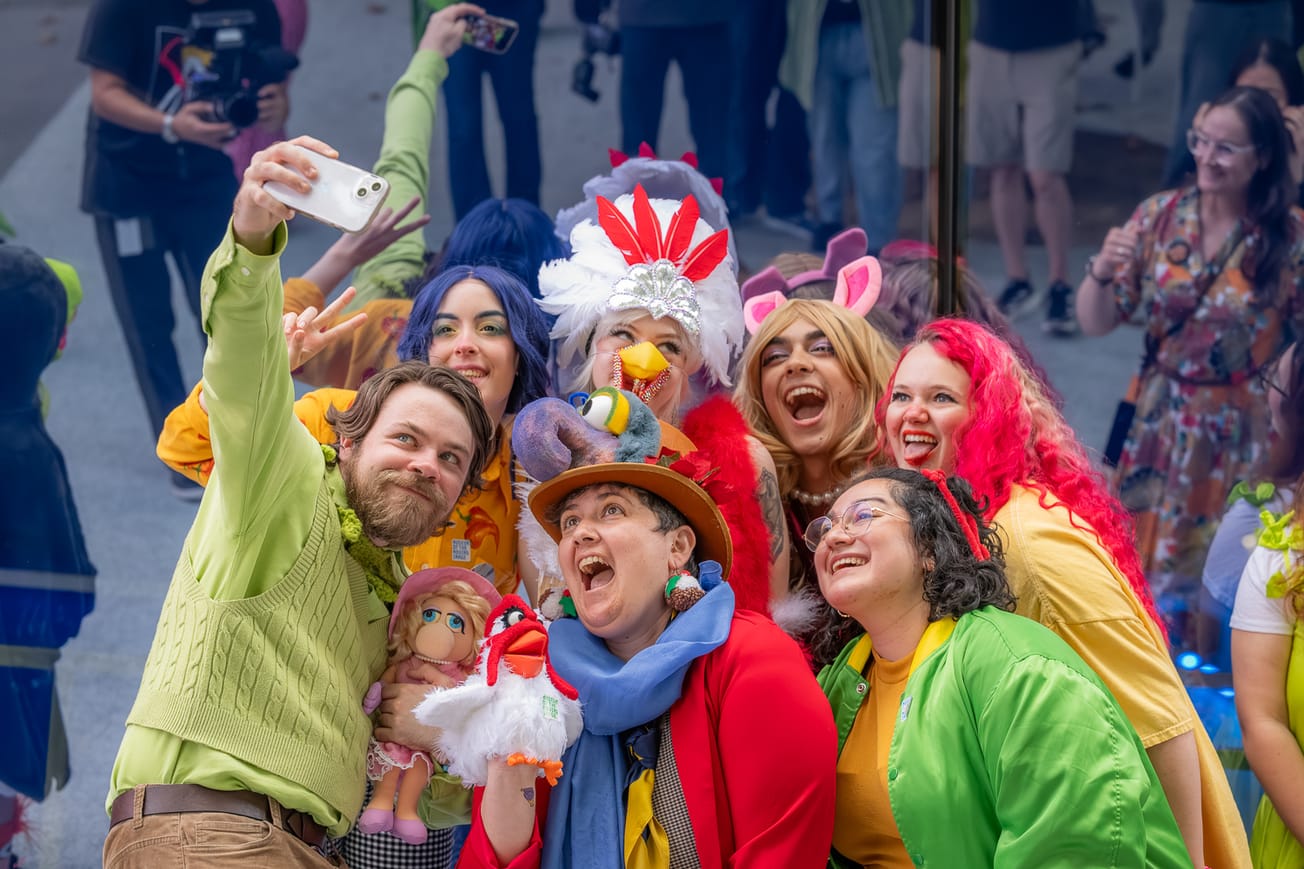
Members of Situation Project’s sister agencies, Situation and Town Hall, stood alongside educators who have coordinated field trips, advocates who have championed the mission, and supporters who have helped sustain it. It was a cross-section of the community that has grown around the work—people who, in different ways, have helped turn empty seats into something meaningful.
A Different Kind of Count
Before closing, Bazadona offered a simple invitation.
“The next time you’re in a play, a concert, or a show, I encourage you to look around,” he said. “Count the empty seats. Now imagine those seats filled with a student seeing a live performance for the very first time.”
It’s a reframing that sits at the heart of Situation Project’s work. Not scarcity, but possibility. Not what’s missing, but what could be.
“That’s what Situation Project is building toward,” he said. “A future where no seat goes to waste and no kid goes without.” Moments later, the bell rang.
For most, it signaled the start of a trading day. For those in the room—and for the students whose stories were carried into that space—it marked something else entirely: a reminder that access is not an abstract idea. It is something built, collectively, one open door at a time.