A Train Ride to Oz
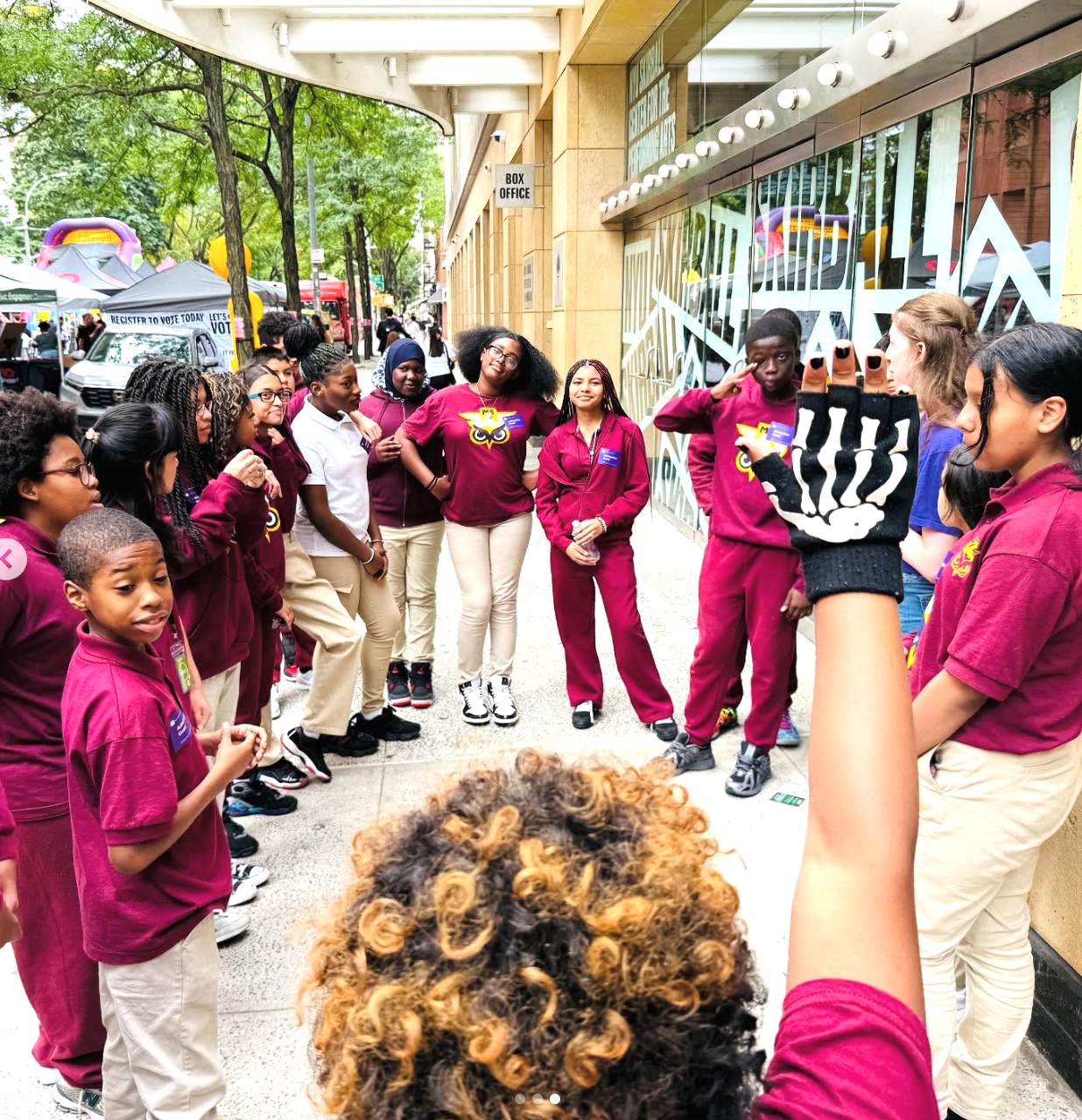
The subway car is loud in the way middle schoolers tend to be—half conversation, half anticipation. Someone near the door is already humming a song they half-know from the movie.
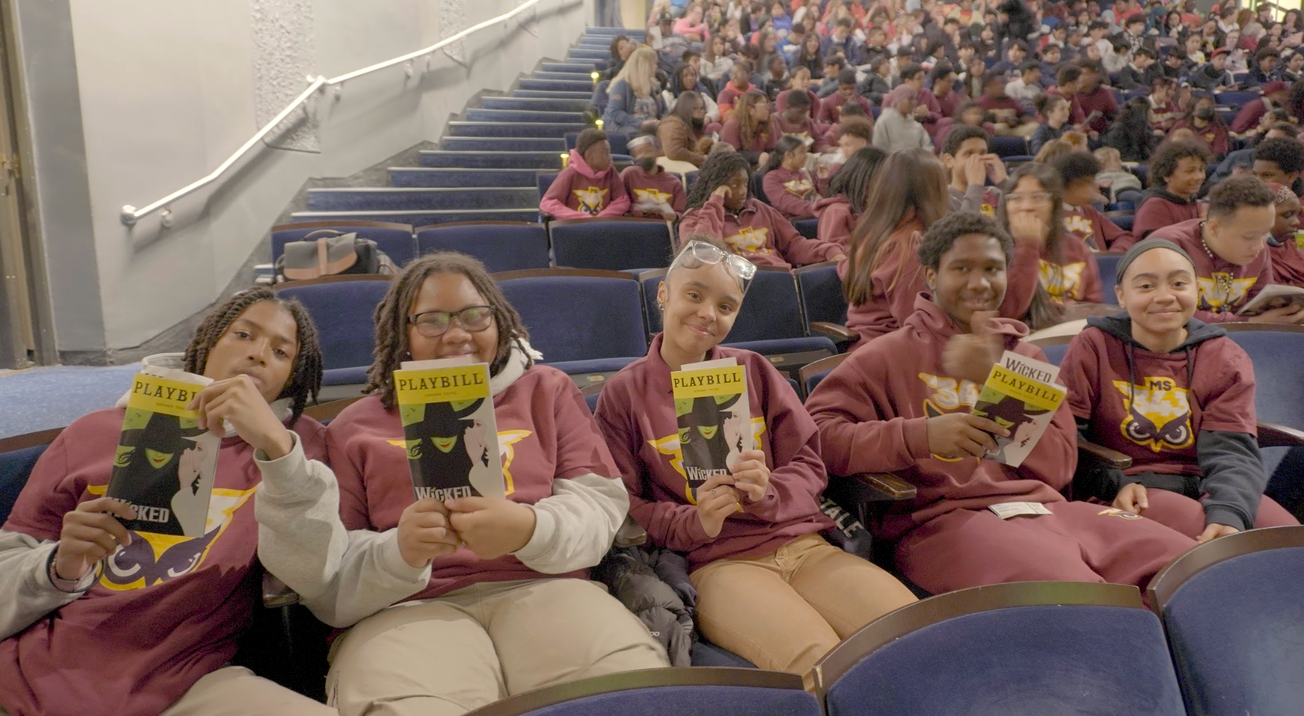
For many of the 150 students traveling from the South Bronx that morning, this is not just another school trip. It’s their first time heading to a Broadway theater of this magnitude, their first time stepping into a space as large and storied as the Gershwin Theatre.
They are on their way to see Wicked.
Stories They Know, Stages They Don’t
For students in New York City public schools, access to live theatre is often limited, not by interest, but by opportunity. Funding for arts education continues to shrink, and trips outside the classroom can be difficult to coordinate, especially when costs add up quickly.
That means many students experience stories primarily through screens, not stages. They know the characters, the songs, the arcs, but not the feeling of a live orchestra vibrating through the floor, or the collective energy of an audience reacting in real time.
The gap isn’t about curiosity. It’s about access.
And when that access opens, even briefly, it can shift how students understand both the story and their place within it.
Inside the Gershwin
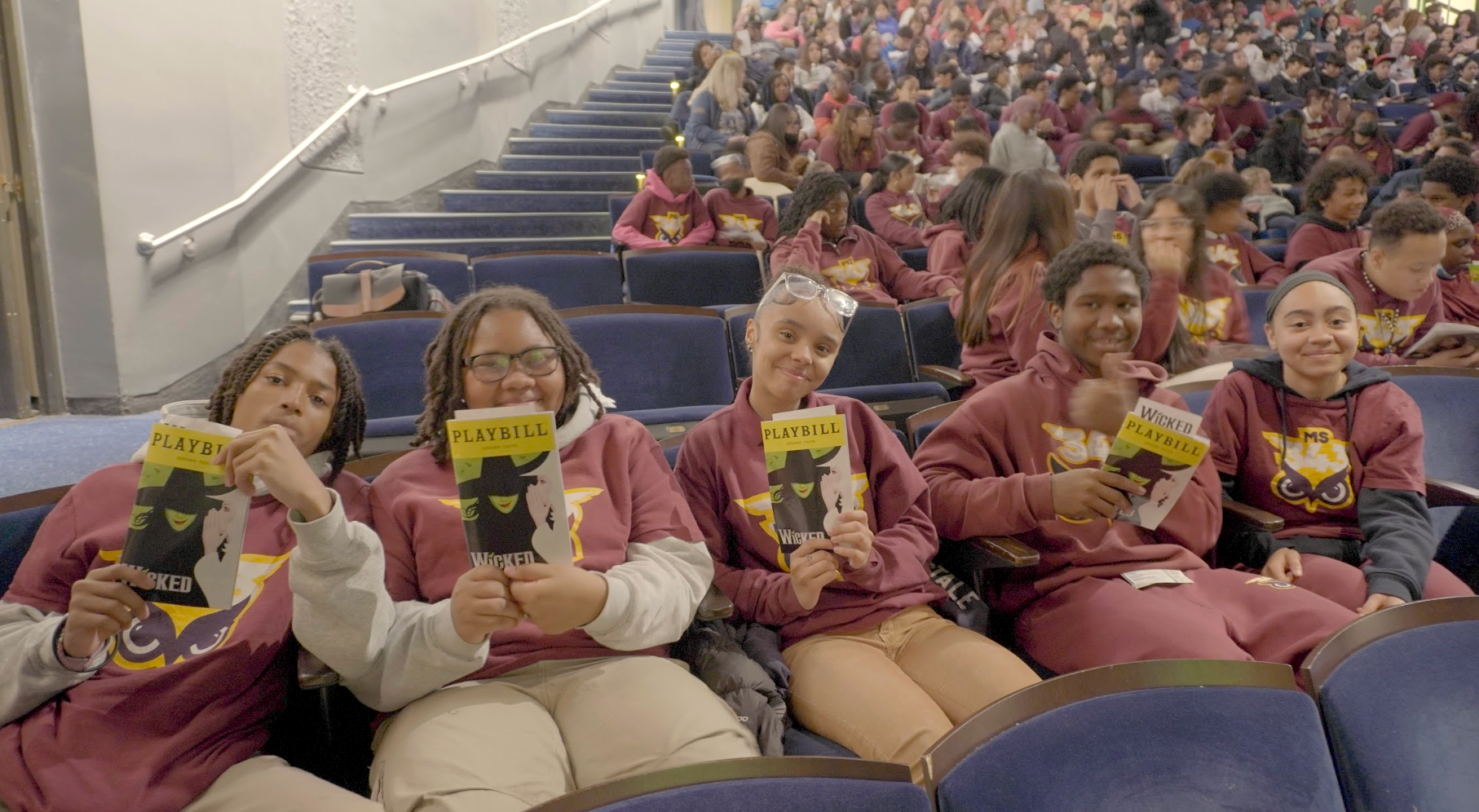
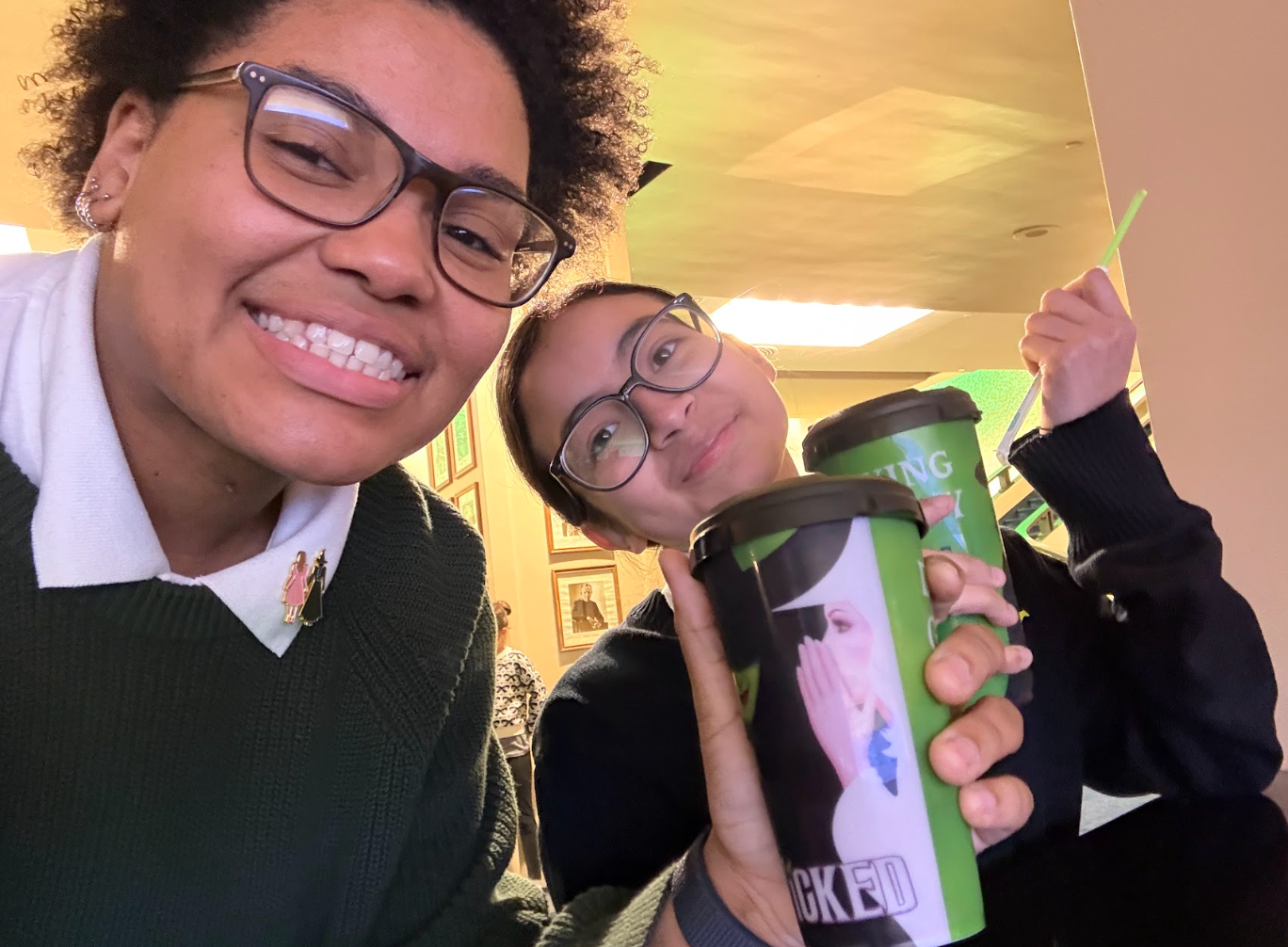
The matinee performance of Wicked welcomed 150 Situation Project students as part of the organization’s ticket initiative, which connects New York City students with live arts and cultural experiences across the city. Each year, nearly 3,500 students participate, many from Title I schools with limited access to arts programming.
For this group, the day began with a subway ride and ended in orchestra-level seats—close enough to see expressions, to hear every note clearly, to feel the scale of the production without distance.
Wicked, which has supported Situation Project’s work since its early days, offered more than a seat in the theater. It offered proximity.
The story itself, centered on identity, difference, and the pressure to conform, was already familiar to some students through its recent film adaptation. But seeing it unfold live created a different kind of connection. The characters were no longer distant or abstract. They were present, moving through the same space.
Watching, Listening, Responding
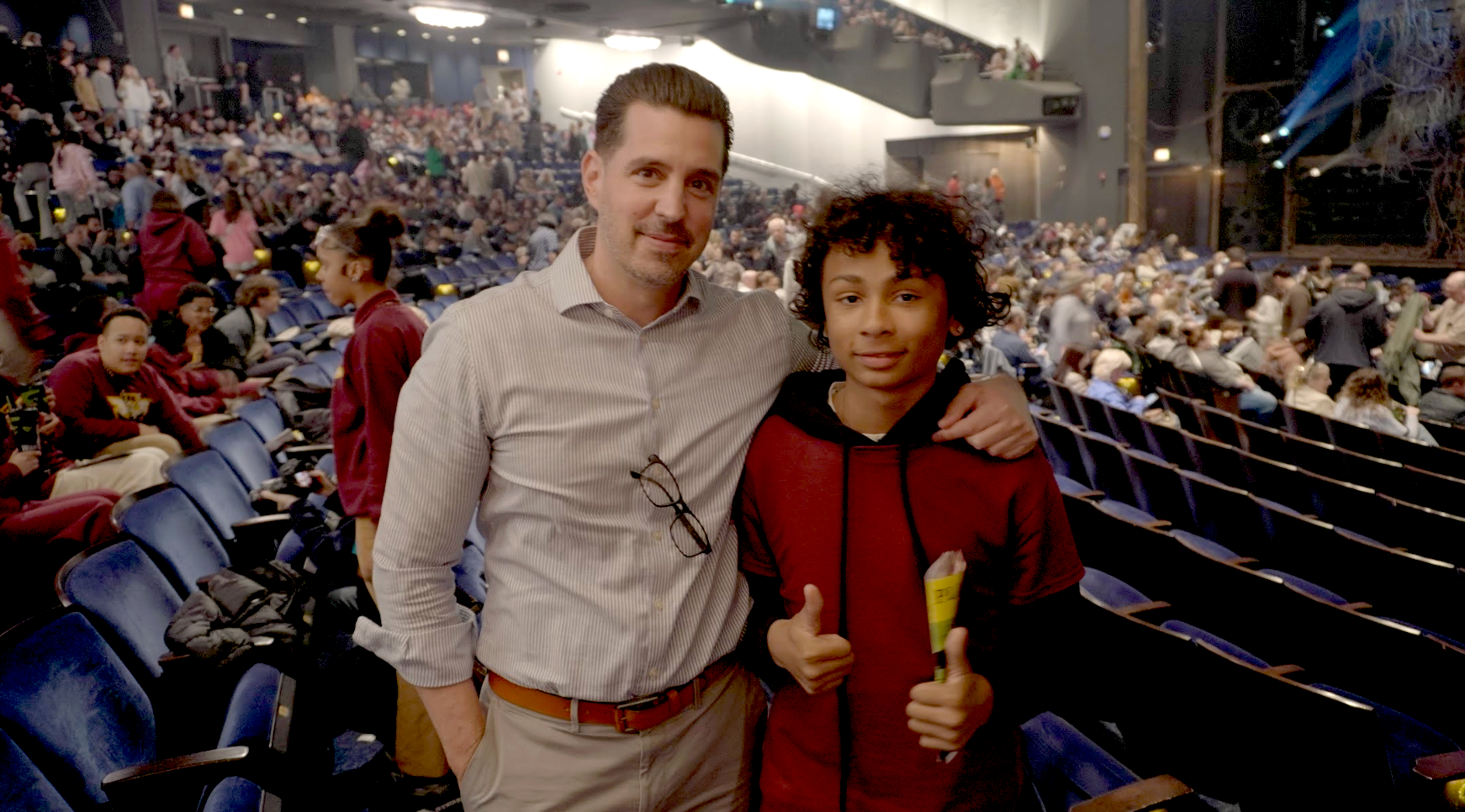
“We’ve been trying to get our students to this show for a few seasons. After the movie’s release it was the hottest seller in town,” said Vincent Gassetto, Principal of MS 343. “We’re so excited to share this with our kids today.”
That excitement moved through the group as the performance began. Students leaned forward, reacting in real time, laughing, whispering to each other, tracking the story as it unfolded in front of them.
For many, it was an active kind of watching. They were not just observing; they were processing.
“Exposing our students to characters and stories they’re familiar with in a new medium is thrilling,” said Samara Berger, Executive Director of Situation Project. “Their anticipation, delight, confusion, etc. are all part of their processing and finding their place in the story. I think we can all relate to that.”
That process continued through the final moments of the show.
When the cast took their bows and the curtain fell, the response from the students was immediate and full. The applause was epic, layered with cheers that carried well beyond the theatre.
Students filed out practicing Elphaba’s battle cry, some on pitch, some not so much, but laughing, belting, making it their own. They were sharing in her unapologetic expression, emotion, and energy that comes with such a powerful release.
What It Means to Be Seen
The impact of a day like this doesn’t rest on a single moment. It builds through a series of small recognitions: seeing a character who feels familiar, hearing a story that resonates, sitting in a space that once felt out of reach and realizing you belong there.
Wicked offers a narrative that centers on difference, not as something to hide, but as something powerful. For students navigating their own identities, that message lands in different ways. Some may see themselves in Elphaba’s defiance, others in Glinda’s journey toward understanding, and others still in the relationships that shift and deepen over time.
What matters is the possibility of connection.
When students encounter that kind of story in a live setting, the experience expands. It becomes not just about what they are watching, but about how they are watching—and who they are watching it with.
Programs like Situation Project’s ticket initiative don’t change the systemic challenges that limit access to arts education, but they create moments where those limitations are interrupted. They offer a different entry point, one that allows students to engage with the arts as participants rather than observers from a distance.
And those moments accumulate.
Carrying It Back Home
As the group made its way out of the Gershwin Theatre and back onto the subway, the conversation picked up where it left off, favorite characters, favorite scenes, questions about how the show was made.
The volume stayed high. The performance had ended, but the experience was still unfolding in real time.
Back in the South Bronx, the day would settle into memory, into classroom conversations, into the quieter process of reflecting on what they saw and how it felt.
But for now, it was still immediate. Still shared.
And somewhere between the theater and the train ride home, the story of Oz had become something closer, something they could carry with them, long after the curtain came down.
To learn more about Situation Project, visit https://www.situationproject.org/. To learn more about Wicked, visit https://wickedthemusical.com/.
Inspired was created by Situation Project 501(c)3.